

I'm looking for:
Recently viewed
Agentic AI development London - autonomous AI agents for business workflows

Agentic AI Development London

Softomate builds autonomous AI agent systems for London businesses from £8,000 for a single-agent workflow proof-of-concept to £45,000 for a multi-agent platform replacing an entire business function. Agentic AI differs fundamentally from chatbots - these systems plan, research, make decisions and execute multi-step tasks without human intervention, working across your CRM, email, web and internal tools simultaneously. London professional services firms use our agentic systems for competitive intelligence, proposal generation, regulatory monitoring and lead qualification workflows that previously required 4-6 hours of analyst time per day.

From £8,0004-16 week buildFree scoping call
Call to Discuss Your Project
CALL: 07442 569900
WhatsApp Us
WHATSAPP US

Last updated: June 2026

What Can Agentic AI Do That Standard AI Cannot?

Agentic AI takes a goal and works autonomously to achieve it - reading documents, searching the web, running calculations, calling APIs and deciding what to do next based on intermediate results - all without human prompting between steps. Standard AI answers one question at a time. Agentic AI handles workflows that currently require an analyst to manage a 4-8 step sequence across multiple tools. London businesses use Softomate agentic systems to replace 4-6 hours of daily analyst work for tasks such as competitive monitoring, proposal drafting and regulatory change tracking. Related services: AI orchestration and workflow automation and AI chatbot development London.

01. Key Benefits

Why London Businesses Are Investing in Agentic AI

autonomous execution icon

Autonomous Multi-Step Execution

The agent sets its own sub-goals, selects tools and executes steps sequentially or in parallel. A competitive intelligence agent might search 12 competitor websites, extract pricing data, compare against your rates and draft a briefing document - all from a single trigger. No human coordination between steps. Runtime for what previously took 3 hours of analyst time: typically 8-15 minutes.

cross-system integration icon

Cross-System Integration

Agentic AI accesses multiple systems in a single workflow - reading from your CRM, searching the web, writing to Google Sheets, sending emails and updating Slack - without you building separate automations for each hand-off. One agent orchestrates everything a human analyst would touch in completing a complex task.

adaptive decision making icon

Adaptive Decision-Making

Unlike rule-based automation that breaks when inputs vary, agentic AI adapts its approach based on what it finds. If a web search returns unexpected data, the agent adjusts its next step. If a document is unavailable, it tries an alternative source. This adaptability handles the real-world messiness of business workflows that rigid RPA cannot.

human in the loop icon

Human-in-the-Loop Safety Gates

Every production deployment includes approval gates before write actions. The agent plans and prepares; a human approves execution. Over time, as reliability is proven, approval gates can be removed for specific action types. This graduated autonomy model ensures safety without sacrificing the efficiency benefits of automation.

audit trail icon

Full Decision Audit Trail

Every agent action, tool call, intermediate result and decision point is logged. You can replay exactly what the agent did and why for any given task. This is essential for regulated businesses and for debugging unexpected outputs. LangGraph's explicit state management makes this significantly more reliable than less structured agent frameworks.

scale icon

Unlimited Parallel Scale

A single agent instance can run 50 tasks simultaneously. A multi-agent system can process hundreds of workflows in parallel. As your business grows, the agent system scales instantly without hiring additional analysts. Tasks that currently queue for days due to analyst bandwidth complete in hours regardless of volume.

02. Use Cases

Which Business Workflows Does Agentic AI Automate?

Competitive Intelligence and Market Monitoring

The agent monitors competitor websites, job boards, regulatory announcements and industry news sources daily. It extracts pricing changes, new product launches, team changes and strategic announcements. It scores each finding by relevance to your business and delivers a curated briefing to your Slack channel each morning. What previously required a dedicated analyst 2-3 hours daily runs overnight in 12 minutes. Particularly valuable for financial services, legal and technology businesses in London.

Automated Proposal and Tender Generation

When a new lead is added to your CRM, the agent researches the prospect's business, reviews the relevant case studies, pulls your pricing data and drafts a customised proposal document. For tender responses, the agent reads the specification, maps it against your capabilities and generates a first-draft response structured to the tender format. A London consulting firm reduced proposal turnaround from 3 days to 4 hours using this workflow.

Regulatory Change Monitoring and Impact Analysis

The agent monitors FCA, HMRC, ICO, Companies House, planning portals and sector-specific regulatory bodies for new publications, consultations and rule changes. When a change is detected, it analyses the impact on your specific business operations, identifies affected processes and drafts a summary for your compliance team. Legal and financial services firms in London use this to cut compliance research time by 60-70% while ensuring no relevant change is missed.

End-to-End Lead Qualification and Follow-Up

A multi-agent system handles the entire lead pipeline: the intake agent qualifies new leads from web forms, email and LinkedIn; the research agent enriches each qualified lead with company data; the sequence agent sends personalised follow-up emails at configured intervals; the CRM agent logs every interaction. Human sales staff only engage when a lead scores above your quality threshold. London B2B businesses using this system report 35-45% more qualified calls per week without increasing headcount.

Data Analysis and Reporting Automation

Monthly management reports, board packs and client performance reports that take an analyst a full day to compile can be automated end-to-end. The agent pulls data from your CRM, accounting system and analytics platforms, runs the calculations, identifies the key trends and variances, and generates the report in your house style. A human reviewer approves before sending. This workflow is particularly well-suited to accountancy firms, marketing agencies and financial services businesses producing regular client reports.

03. Technical Stack

Built on LangGraph, CrewAI and OpenAI

LangGraph Orchestration

LangGraph's explicit state machine architecture makes agent behaviour predictable, debuggable and auditable. Every node transition is logged. States persist across steps so complex multi-stage workflows don't lose context. Cyclic execution allows agents to retry and refine without starting from scratch. Recommended for all production systems where reliability and compliance matter.

CrewAI Multi-Agent Teams

CrewAI enables role-based multi-agent collaboration - a Researcher agent, an Analyst agent and a Writer agent working in parallel on the same task, each with defined responsibilities and handoff protocols. Ideal for workflows requiring different expertise at different stages - for example, market research followed by financial modelling followed by report writing, each by a specialist agent.

MCP Tool Integration

Model Context Protocol server connections allow agents to access your internal systems securely without exposing full API credentials. We build MCP servers for proprietary systems that lack a public API. Tool calls are logged and rate-limited per agent role. This architecture means each agent has only the permissions it needs - no agent has blanket access to all your systems.

Human-in-the-Loop Gates

Approval gates are built into every production write action using LangGraph's interrupt mechanism. The agent pauses before execution, presents its plan and awaits human approval via Slack, email or a web dashboard. Approval status is logged to the audit trail. Gates can be configured per action type - some actions always require approval, others can be auto-approved after a confidence threshold is met.

GDPR-Compliant Data Handling

Agent memory is partitioned by data sensitivity. Personal data processed during agent tasks is handled under explicit legal basis, stored in UK-resident infrastructure and purged per configured retention policies. Agents operating on customer data include consent verification before processing. ICO-compliant data processing agreements cover all agent deployments. Regulated sector clients receive sector-specific GDPR packs.

Observability Dashboard

LangSmith tracing provides a real-time view of every agent run - tools called, tokens used, latency per step, success and failure rates. Monthly performance reviews use this data to optimise prompts, improve tool selection accuracy and reduce unnecessary steps. Observability is not optional for production agentic systems - it is the mechanism by which you verify the system is working correctly.

04. Process

How Softomate Builds Agentic AI Systems

From workflow audit to production deployment, Softomate manages the full development lifecycle. You describe the business problem; we design the agent architecture, select the right tools and frameworks, build and test the system, and hand over a production deployment with full documentation and training. Single-agent proofs of concept deploy in 4-6 weeks. Multi-agent platforms take 8-16 weeks.
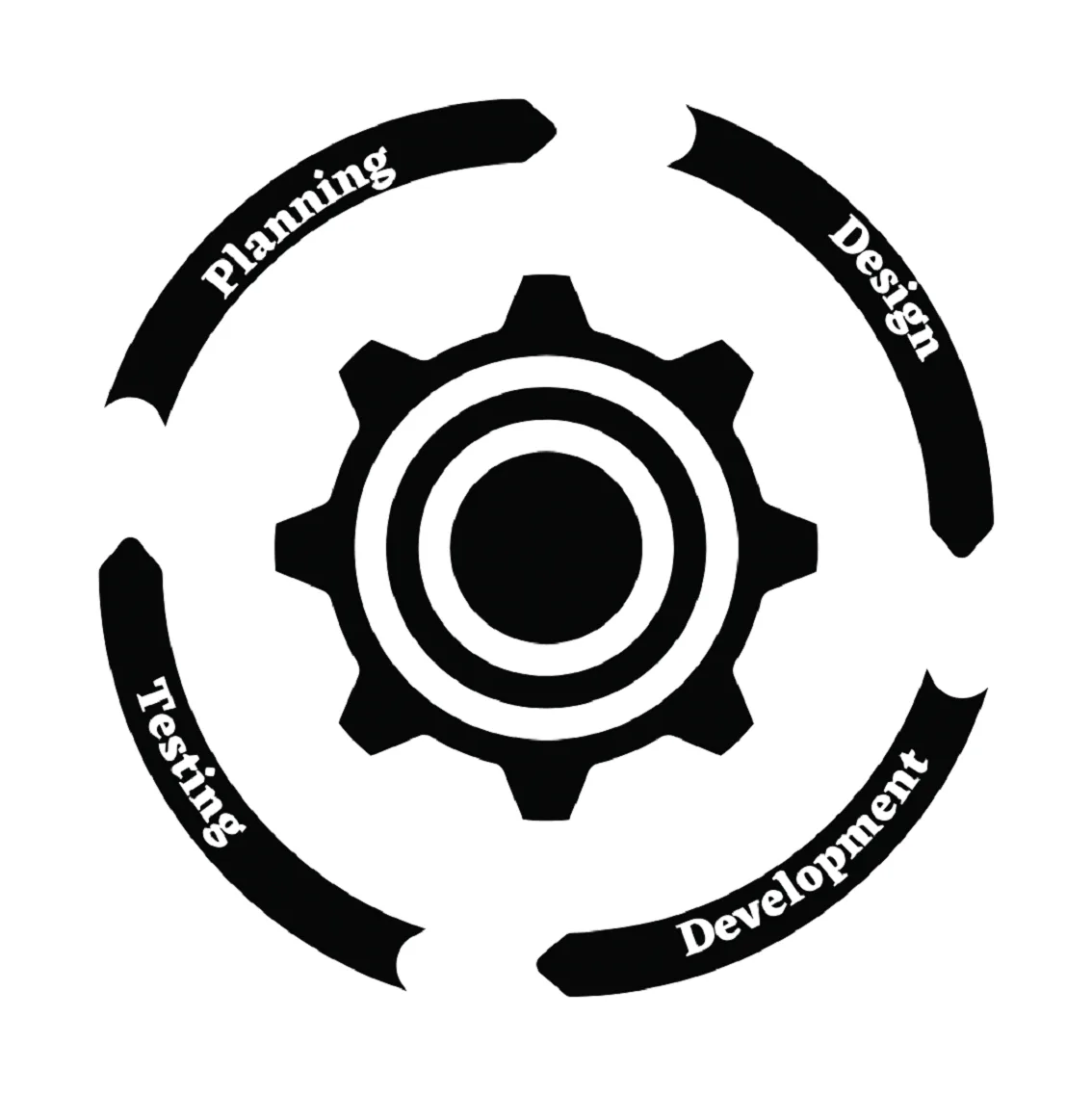
Agentic AI development process

Workflow Audit

Workflow audit

We map every step of your target workflow - what information is needed at each stage, which systems are accessed, what decisions are made and what outputs are produced. We estimate current time cost, error rate and the value of automation. Output: a workflow map and an automation feasibility score. High-feasibility workflows (clear steps, structured data, verifiable outcomes) proceed to architecture. Low-feasibility workflows are redesigned before automation is attempted.

Architecture Design

Architecture design

We design the agent topology: single-agent or multi-agent, sequential or parallel execution, tool set, memory architecture and approval gate placement. Framework selection (LangGraph vs CrewAI vs Assistants API) is justified with reference to your reliability, compliance and maintenance requirements. A system architecture document is produced and approved before any code is written.

Build

Build phase

Agent logic, tool integrations, state management and approval gate UI are built in parallel by the Softomate engineering team. A staging environment is deployed from week one so you can observe agent behaviour on real (but non-production) data throughout the build. Integration with your existing systems is built first, before agent logic, so the data foundation is validated before complex reasoning is layered on top.

Testing

Testing phase

We run 100+ test cases covering normal execution paths, edge cases, unexpected inputs and adversarial inputs designed to cause incorrect agent decisions. LangSmith traces every test run so failures can be diagnosed at the step level. You run acceptance testing on a representative sample of real workflows before production sign-off. All test cases and outcomes are documented in the handover pack.

Deploy

Deploy phase

Production deployment with full approval gates active. The first two weeks of production operation include daily check-ins from Softomate to review LangSmith traces, catch unexpected behaviours and make prompt and tool updates. After 4 weeks of stable operation, approval gate removal can be considered for specific action types. Monthly optimisation reviews are included in all maintenance plans.

05. Why Choose Us

Why London Businesses Choose Softomate for Agentic AI

deco
Softomate agentic AI teamAgentic AI London Softomate
production-grade icon

Production-Grade Architecture

We build systems using LangGraph's explicit state management - not ad-hoc agent chains. Every deployment includes audit logging, error recovery, retry logic and human approval gates. Production agentic AI requires engineering discipline that most proof-of-concept demos lack. Our systems run reliably in regulated environments where a wrong decision has real consequences.

domain expertise icon

London Business Domain Expertise

Our agentic AI implementations cover financial services, legal, accountancy, consulting, property and technology sectors. Domain knowledge matters - a competitive intelligence agent for a law firm requires different data sources, different compliance handling and different output format than one for a technology startup. We bring both AI engineering and sector knowledge to every project.

results icon

Measurable ROI Within 90 Days

Every agentic AI project has a defined ROI target based on time saved per workflow, error rate reduction and increased throughput. We measure actual performance against target at 30, 60 and 90 days. A consulting firm saved 22 analyst hours per week. A legal practice reduced proposal turnaround from 72 to 6 hours. Outcomes are tracked, not assumed.

transparent pricing icon

Fixed-Price, No Surprises

Agentic AI projects are scoped and priced as fixed-fee engagements after a thorough discovery workshop. No hourly billing. No scope creep without agreed change control. The scoping call is free and takes 60 minutes. You receive a detailed proposal with architecture, timeline and fixed cost within 5 working days. Monthly maintenance costs are fixed, not consumption-based.

06. Pricing

Agentic AI Development London - Pricing Guide 2026

Agentic AI development costs in London range from £8,000 for a single-workflow proof-of-concept to £45,000+ for a fully integrated multi-agent platform. Monthly maintenance and monitoring runs £300-£800 per month. Most London professional services businesses find that a £12,000-£18,000 Standard project delivers full ROI within 90 days through analyst time savings alone.

Proof of Concept

£8,000-£12,000

Single-agent, one workflow, 3-5 tools, staging environment, 4-6 week delivery. Ideal for validating the approach before a larger investment.

Standard

£12,000-£25,000

Single or dual agent, full CRM and system integration, approval gate UI, observability dashboard, 6-10 week delivery.

Multi-Agent Platform

£25,000-£45,000

3-6 agents, full business function automation, enterprise integrations, custom dashboard, 10-16 week delivery.

Enterprise

£45,000+

Custom agent networks, enterprise security review, dedicated account manager, SLA, quarterly optimisation roadmap.

Monthly maintenance: £300-£800/month. All pricing is fixed-fee after discovery. Book a free scoping call to receive a fixed quote for your specific workflow requirements.

09. FAQs

Frequently Asked Questions - Agentic AI Development London

A standard chatbot responds to a single question with a single answer. An agentic AI system plans and executes a sequence of actions autonomously - it can search the web, read documents, run calculations, call APIs, write code, send emails and decide what to do next based on intermediate results. The agent keeps working until the goal is achieved, not until it runs out of pre-programmed responses. Agentic AI is appropriate for complex workflows with more than 3-4 steps that currently require a human to manage the sequence.

Agentic AI development in London typically costs £8,000-£45,000 depending on the number of agents, tools connected, complexity of the decision logic and integration depth. A single-agent proof-of-concept for one specific workflow (for example, automated competitor monitoring and reporting) costs £8,000-£15,000. A multi-agent system handling an entire business function (for example, end-to-end lead qualification, proposal generation and follow-up) costs £25,000-£45,000. Monthly monitoring and optimisation runs £300-£800 per month.

We use LangGraph for state machine-based agent orchestration, CrewAI for role-based multi-agent systems, AutoGen for conversational agent networks and OpenAI Assistants API for simpler single-agent workflows. Framework choice depends on whether your use case needs sequential task execution, parallel agent collaboration, or dynamic tool selection. We recommend LangGraph for production systems requiring reliability and audit trails - its explicit state management makes debugging and compliance significantly easier than less structured frameworks.

With proper safeguards, yes. All Softomate agentic AI deployments include a human-in-the-loop approval gate for any action that writes to a production system (CRM update, email send, database change). The agent plans and prepares the action; a human confirms before execution. Read-only research and analysis workflows can be fully autonomous from day one. Fully autonomous execution rights are granted incrementally after a review period shows reliable decision quality. We never deploy fully autonomous write access on day one.

Yes. We build tool integrations using REST APIs, webhooks and MCP (Model Context Protocol) server connections. Native integrations exist for Salesforce, HubSpot, Odoo, Google Workspace, Microsoft 365, Notion, Slack, Jira and most common business platforms. For systems without a public API, we build secure internal API wrappers. The agent accesses only the specific data and actions you authorise - no blanket system access is ever granted.

The highest-value use cases we see in London businesses are: competitive intelligence (monitoring competitor pricing, job postings and content daily), proposal generation (researching a prospect and drafting a proposal with no human involvement), regulatory monitoring (tracking FCA/HMRC/planning portal changes and summarising impacts for your team), supplier research (finding and scoring new suppliers against your criteria), and content operations (briefing, drafting, reviewing and scheduling content at scale). Any repetitive workflow requiring judgement and involving more than one system is a strong candidate.

A single-agent proof-of-concept with 3-5 tools typically deploys in 4-6 weeks. A multi-agent system for a business function takes 8-16 weeks from scoping to production deployment. The longest phase is usually integration and testing - connecting to your specific systems, handling edge cases in your data and validating that the agent makes correct decisions across a representative sample of real inputs. We provide a staging environment where you can observe agent behaviour before any production deployment.

Free 30-min scoping call

Ready to scope your agentic AI project?

Talk to DD directly. Prices from £8,000. No commitment, no sales pitch - just honest advice on what will work for your business.

Ready to discuss your project?Speak directly with our founder. Free 30-min scoping call. No commitment.Softomate Solutions, Stanmore, London — 07442 569900
Deen Dayal Yadav, founder of Softomate Solutions

Deen Dayal Yadav

Online

Hi there ðŸ'‹

How can I help you?